


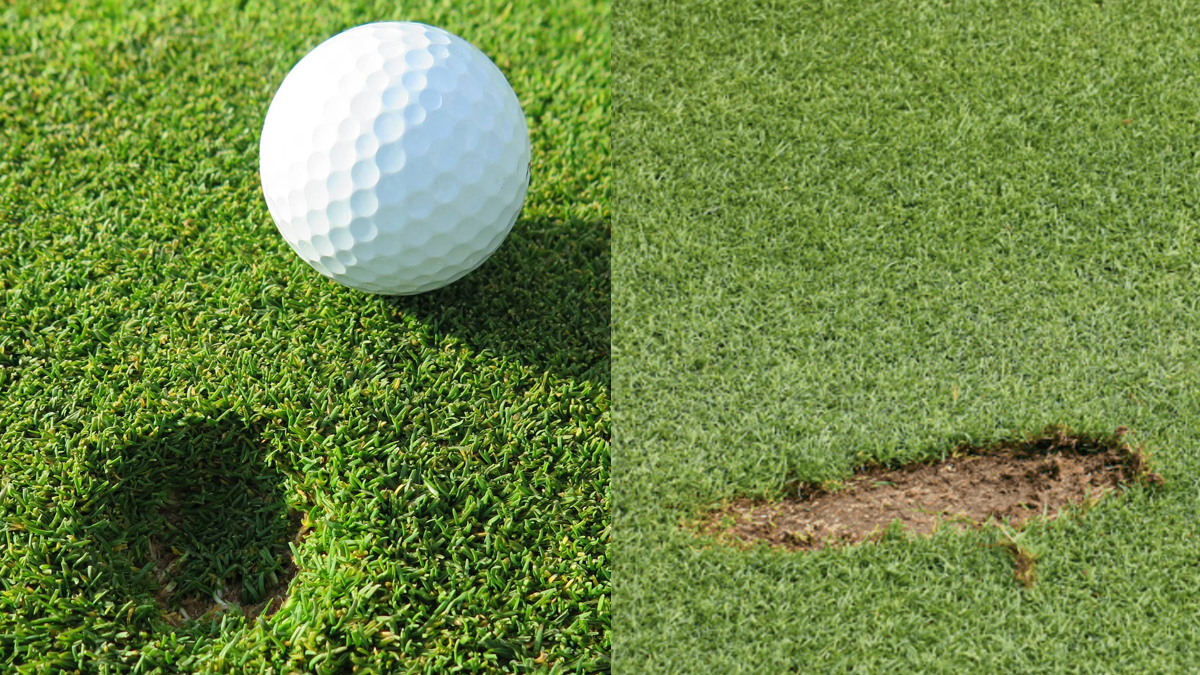
If you’re new to golf — or even if you’ve played for years — the terms ball mark and divot are often used interchangeably. But they’re not the same thing.
Understanding the difference matters, because each one happens in a different part of the course and requires a different type of repair. Here’s a simple breakdown of ball mark vs divot, what causes each, and how golfers should fix them properly.
What Is a Ball Mark in Golf?
A ball mark (also called a pitch mark) happens when a golf ball lands on the green and compresses the turf and roots below the surface.
Ball marks:
- Are found on putting greens
- Are caused by the ball landing from the air
- Compress grass downward rather than removing it
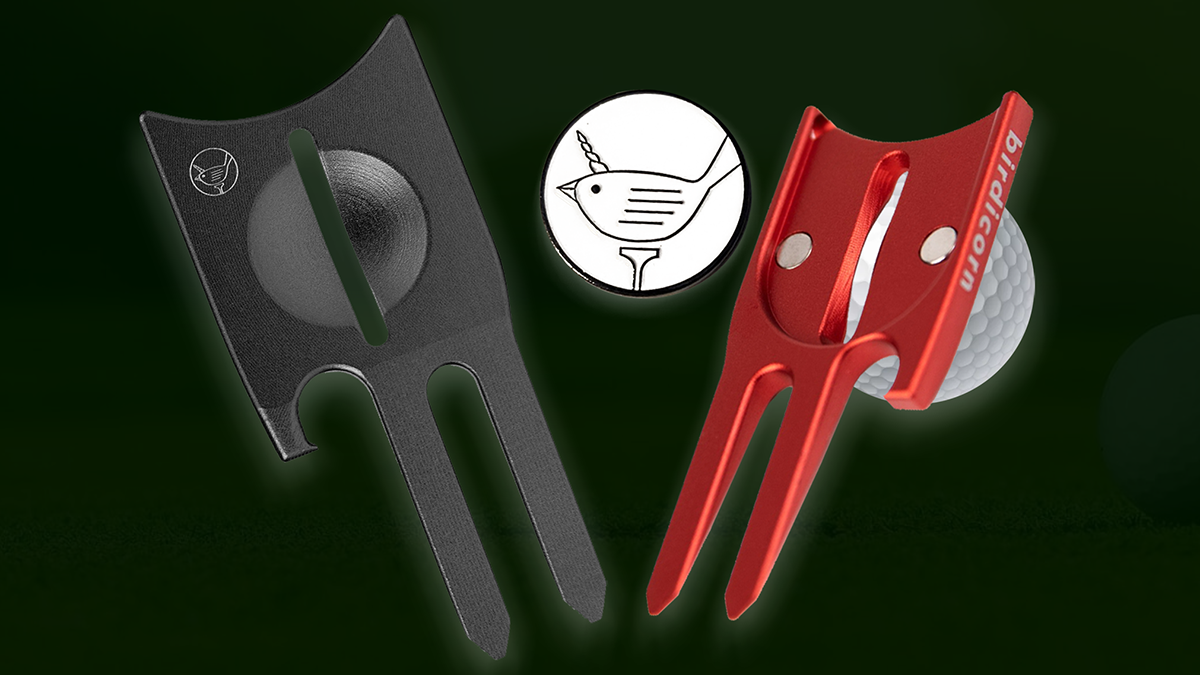
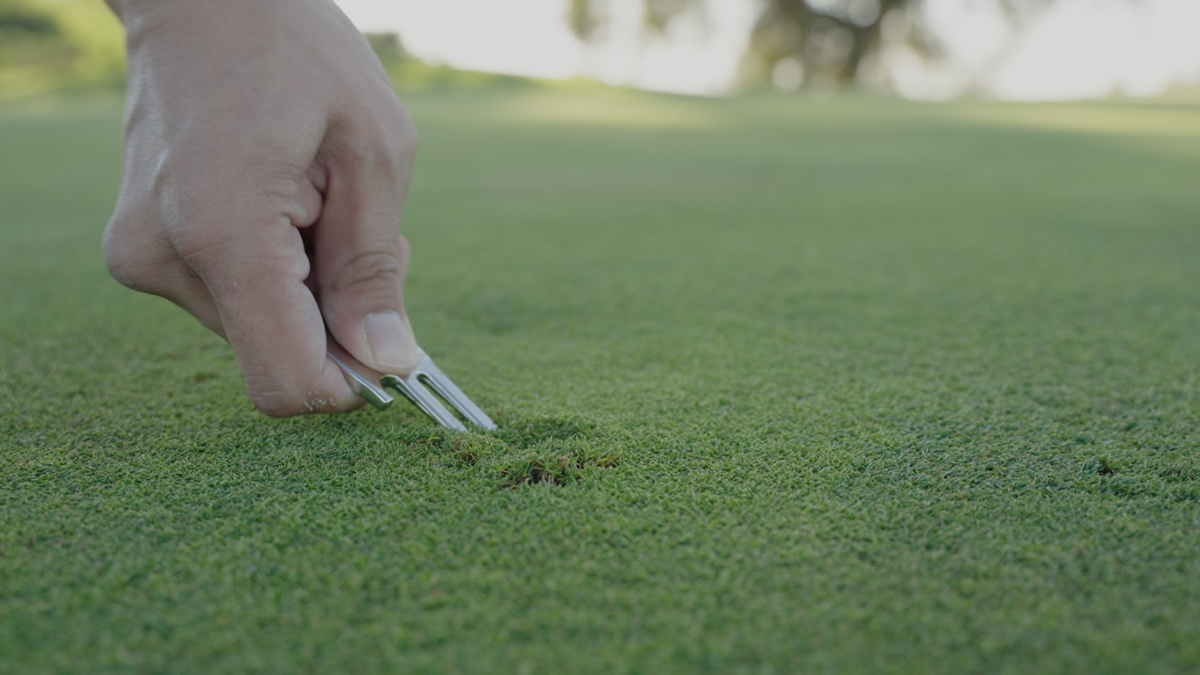
Ball marks should be repaired with a divot tool using the push-in method, guiding turf back toward the center without lifting.
If repaired correctly, most ball marks heal in just a few days.
What Is a Divot in Golf?
A divot happens when a club — usually an iron or wedge — strikes the ground and removes a piece of turf during a swing.
Divots:
- Are found in fairways, tees, or rough
- Are caused by the club breaking the turf
- Remove grass completely instead of compressing it
Divots are repaired by either:
- Replacing the turf if it’s intact, or
- Filling the area with sand or seed mix provided by the course
Divots are not repaired with a divot tool.
Ball Mark vs Divot: The Key Differences
The easiest way to remember the difference is this:
- Ball mark = ball hits the green
- Divot = club breaks the turf
Ball marks compress grass downward and require careful repair to protect the roots. Divots remove grass and require replacement or fill, depending on course policy.
Each one affects turf differently, which is why the repair method matters.
Why Ball Marks Need a Different Repair Method
Because ball marks don’t remove turf, the goal isn’t to fill a hole — it’s to help the grass recover.
Improper ball mark repair, especially lifting the center upward, can tear roots and slow healing. That’s why golfers are encouraged to push turf inward from the edges instead.
Learning how to fix a ball mark the right way helps keep greens smoother and healthier over time.
Why Divots Don’t Use Divot Tools
Despite the name, divot tools are not meant for divots.
Divots require:
- Replacing the turf chunk, or
- Using sand/seed mix
Using a divot tool on a divot won’t help the grass recover and can actually make the damage worse.
Understanding this difference helps golfers repair the course correctly — and avoid causing more harm.
Common Mistakes Golfers Make
Some of the most common mistakes include:
- Calling ball marks “divots” on the green
- Trying to use a divot tool to fix a divot
- Lifting ball marks instead of pushing turf inward
- Ignoring shallow ball marks
These mistakes are common, but once you understand the difference, they’re easy to avoid.
Which Tool Is Used for What?
- Divot tool: Used only for ball marks on greens
- Sand/seed mix: Used for divots in fairways and tees
- Putter: Used to lightly tamp repaired ball marks
Knowing when and how to use each tool makes you a better playing partner — and helps the course stay in better shape.
Final Thoughts
Ball marks and divots are both part of the game, but they’re not the same thing — and they shouldn’t be treated the same way.
A ball mark happens when a ball lands on the green and needs careful push-in repair. A divot happens when an iron breaks the turf and needs replacement or fill. Understanding the difference helps protect the course and improves conditions for everyone who plays.

Leave a comment
This site is protected by hCaptcha and the hCaptcha Privacy Policy and Terms of Service apply.